



Siga-nos no Instagram
Mais do que uma empresa de actividades ao ar livre.

@sawyerproducts
Follow us on Instagram


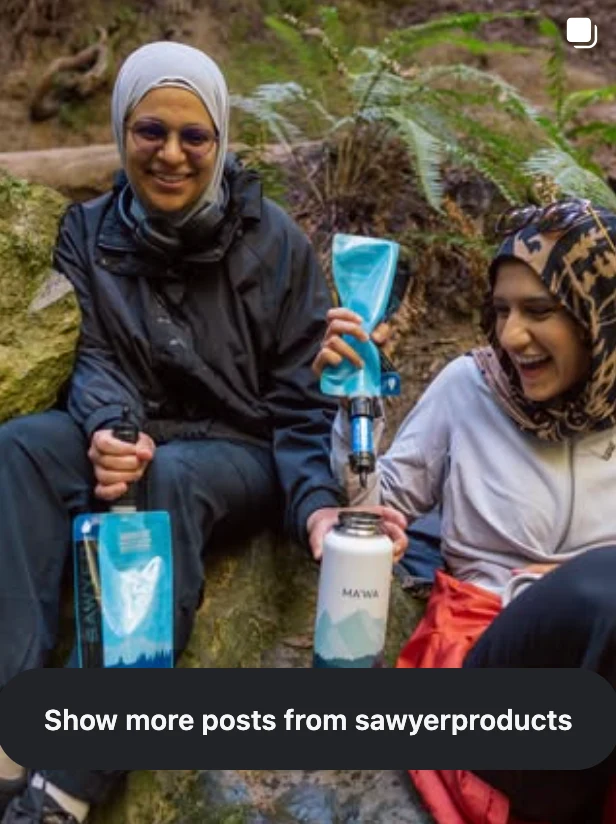

Throughout my journey of motherhood I've learned that every outing in nature can be educational and a chance to spark curiosity and imagination.
Watch videoI recently visited my 19-year-old son, Johnny, over parents' weekend at his college, and we had an amazing time. On Friday nights at the Student Life Center, there’s an open pool session where kayakers can practice strokes and rolling. We went to the pool, put on swimsuits and sprayskirts, and paddled about. Johnny was bracing and rolling effortlessly. For me, it’s been a while. I’m also dealing with some shoulder tendonitis. I was hesitant. He was encouraging.
“C’mon mom, you helped me learn to roll. Now, let’s see your roll.”
I wasn’t feeling it. I did not want to disappoint or wet exit. I did not want to embarrass myself or hurt my shoulder. But I was mostly just afraid of being upside down in the water without a roll. He said I’ll rescue you. He got out of his boat and was treading water. We were in the deep end. He said, “Trust me, I got you, mom.”

I recalled a time 10 years earlier when we were messing around on the Uncompagre River in Colorado. I was below a rapid in a calm pool, and Johnny was going to surf the rapid. He paddled in and flipped. He did not roll, nor did he wet exit.
It was really scary for him, but in a split second, I flipped his boat back up, and we had a moment. “I got you, honey,” I said.
Back in the present, I tipped my boat on purpose, upside down in the water, waiting. And in a split second, without me doing a thing, no hip snap, no hand sweep, no nothin, my son righted the boat and up I came with a dripping wet smile. What a rush. We both cracked up. He said it’s a rescue called “the hand of god.” Or in this case, the hand of my son!

Getting out of one’s comfort zone is a sure way to grow. As Mother’s Day approaches I’ve been reflecting on the ways I’ve embraced challenges and new experiences throughout my journey of motherhood learning that through worldschooling, every outing in nature can be educational and a chance to spark curiosity and imagination.
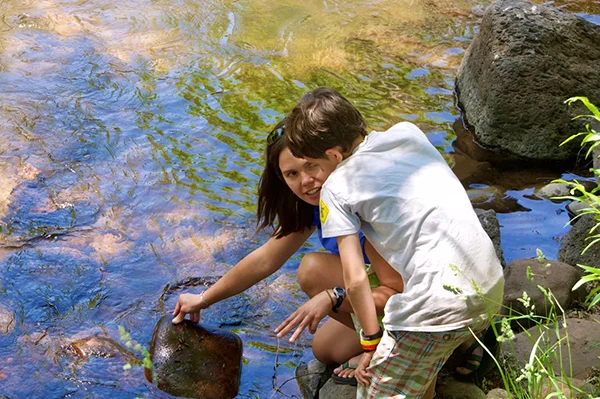
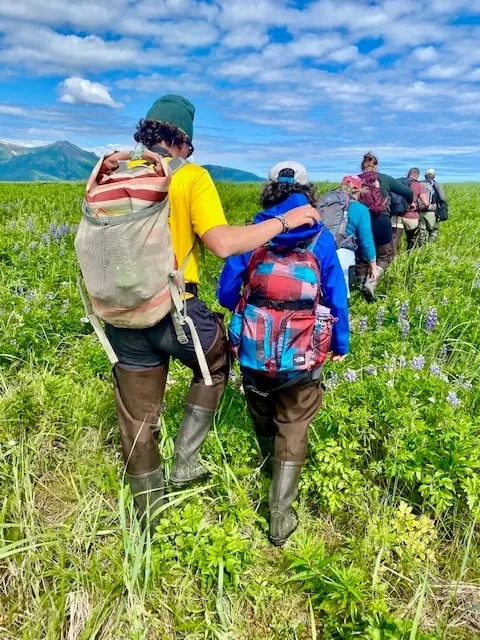
Outdoor play fosters skills for life like critical thinking, collaboration, problem-solving, grit, and self-confidence.


It is important to recognize there are many good and necessary boundaries that we need to respect. To be responsible and respectful travelers, we have to know where it’s okay to camp, on whose land, and how close to waterways. There are local regulations and policies in place to protect and preserve resources, wildlife and cultural heritage. For worldschooling families, this is especially important because everywhere has their own unique set of rules.

Learning about these boundaries is a wonderful educational opportunity. We can stay humble, respect local knowledge, and listen to those we know and trust.
One excellent program is Leave No Trace, which uses research and education to protect the natural world. The 7 Principles of Leave No Trace to establish an enlightened, science-based framework, a set of good boundaries, that help people in the outdoors minimize impact in all kinds of environments, from our own backyards to remote wilderness areas.
Whether we're venturing into the known or unknown, we can use these guidelines to tread lightly, stay safe, and do our part to protect natural and cultural resources for future generations.
Read more on How to Teach Kids to Be Nature Defenders in this article by Reagan Fulton on the Sawyer Blog.


I recently visited my 19-year-old son, Johnny, over parents' weekend at his college, and we had an amazing time. On Friday nights at the Student Life Center, there’s an open pool session where kayakers can practice strokes and rolling. We went to the pool, put on swimsuits and sprayskirts, and paddled about. Johnny was bracing and rolling effortlessly. For me, it’s been a while. I’m also dealing with some shoulder tendonitis. I was hesitant. He was encouraging.
“C’mon mom, you helped me learn to roll. Now, let’s see your roll.”
I wasn’t feeling it. I did not want to disappoint or wet exit. I did not want to embarrass myself or hurt my shoulder. But I was mostly just afraid of being upside down in the water without a roll. He said I’ll rescue you. He got out of his boat and was treading water. We were in the deep end. He said, “Trust me, I got you, mom.”
I recalled a time 10 years earlier when we were messing around on the Uncompagre River in Colorado. I was below a rapid in a calm pool, and Johnny was going to surf the rapid. He paddled in and flipped. He did not roll, nor did he wet exit.
It was really scary for him, but in a split second, I flipped his boat back up, and we had a moment. “I got you, honey,” I said.
Back in the present, I tipped my boat on purpose, upside down in the water, waiting. And in a split second, without me doing a thing, no hip snap, no hand sweep, no nothin, my son righted the boat and up I came with a dripping wet smile. What a rush. We both cracked up. He said it’s a rescue called “the hand of god.” Or in this case, the hand of my son!
Getting out of one’s comfort zone is a sure way to grow. As Mother’s Day approaches I’ve been reflecting on the ways I’ve embraced challenges and new experiences throughout my journey of motherhood learning that through worldschooling, every outing in nature can be educational and a chance to spark curiosity and imagination.
Outdoor play fosters skills for life like critical thinking, collaboration, problem-solving, grit, and self-confidence.
It is important to recognize there are many good and necessary boundaries that we need to respect. To be responsible and respectful travelers, we have to know where it’s okay to camp, on whose land, and how close to waterways. There are local regulations and policies in place to protect and preserve resources, wildlife and cultural heritage. For worldschooling families, this is especially important because everywhere has their own unique set of rules.
Learning about these boundaries is a wonderful educational opportunity. We can stay humble, respect local knowledge, and listen to those we know and trust.
One excellent program is Leave No Trace, which uses research and education to protect the natural world. The 7 Principles of Leave No Trace to establish an enlightened, science-based framework, a set of good boundaries, that help people in the outdoors minimize impact in all kinds of environments, from our own backyards to remote wilderness areas.
Whether we're venturing into the known or unknown, we can use these guidelines to tread lightly, stay safe, and do our part to protect natural and cultural resources for future generations.
Read more on How to Teach Kids to Be Nature Defenders in this article by Reagan Fulton on the Sawyer Blog.
I recently visited my 19-year-old son, Johnny, over parents' weekend at his college, and we had an amazing time. On Friday nights at the Student Life Center, there’s an open pool session where kayakers can practice strokes and rolling. We went to the pool, put on swimsuits and sprayskirts, and paddled about. Johnny was bracing and rolling effortlessly. For me, it’s been a while. I’m also dealing with some shoulder tendonitis. I was hesitant. He was encouraging.
“C’mon mom, you helped me learn to roll. Now, let’s see your roll.”
I wasn’t feeling it. I did not want to disappoint or wet exit. I did not want to embarrass myself or hurt my shoulder. But I was mostly just afraid of being upside down in the water without a roll. He said I’ll rescue you. He got out of his boat and was treading water. We were in the deep end. He said, “Trust me, I got you, mom.”
I recalled a time 10 years earlier when we were messing around on the Uncompagre River in Colorado. I was below a rapid in a calm pool, and Johnny was going to surf the rapid. He paddled in and flipped. He did not roll, nor did he wet exit.
It was really scary for him, but in a split second, I flipped his boat back up, and we had a moment. “I got you, honey,” I said.
Back in the present, I tipped my boat on purpose, upside down in the water, waiting. And in a split second, without me doing a thing, no hip snap, no hand sweep, no nothin, my son righted the boat and up I came with a dripping wet smile. What a rush. We both cracked up. He said it’s a rescue called “the hand of god.” Or in this case, the hand of my son!
Getting out of one’s comfort zone is a sure way to grow. As Mother’s Day approaches I’ve been reflecting on the ways I’ve embraced challenges and new experiences throughout my journey of motherhood learning that through worldschooling, every outing in nature can be educational and a chance to spark curiosity and imagination.
Outdoor play fosters skills for life like critical thinking, collaboration, problem-solving, grit, and self-confidence.
It is important to recognize there are many good and necessary boundaries that we need to respect. To be responsible and respectful travelers, we have to know where it’s okay to camp, on whose land, and how close to waterways. There are local regulations and policies in place to protect and preserve resources, wildlife and cultural heritage. For worldschooling families, this is especially important because everywhere has their own unique set of rules.
Learning about these boundaries is a wonderful educational opportunity. We can stay humble, respect local knowledge, and listen to those we know and trust.
One excellent program is Leave No Trace, which uses research and education to protect the natural world. The 7 Principles of Leave No Trace to establish an enlightened, science-based framework, a set of good boundaries, that help people in the outdoors minimize impact in all kinds of environments, from our own backyards to remote wilderness areas.
Whether we're venturing into the known or unknown, we can use these guidelines to tread lightly, stay safe, and do our part to protect natural and cultural resources for future generations.
Read more on How to Teach Kids to Be Nature Defenders in this article by Reagan Fulton on the Sawyer Blog.
Mais do que uma empresa de actividades ao ar livre.

